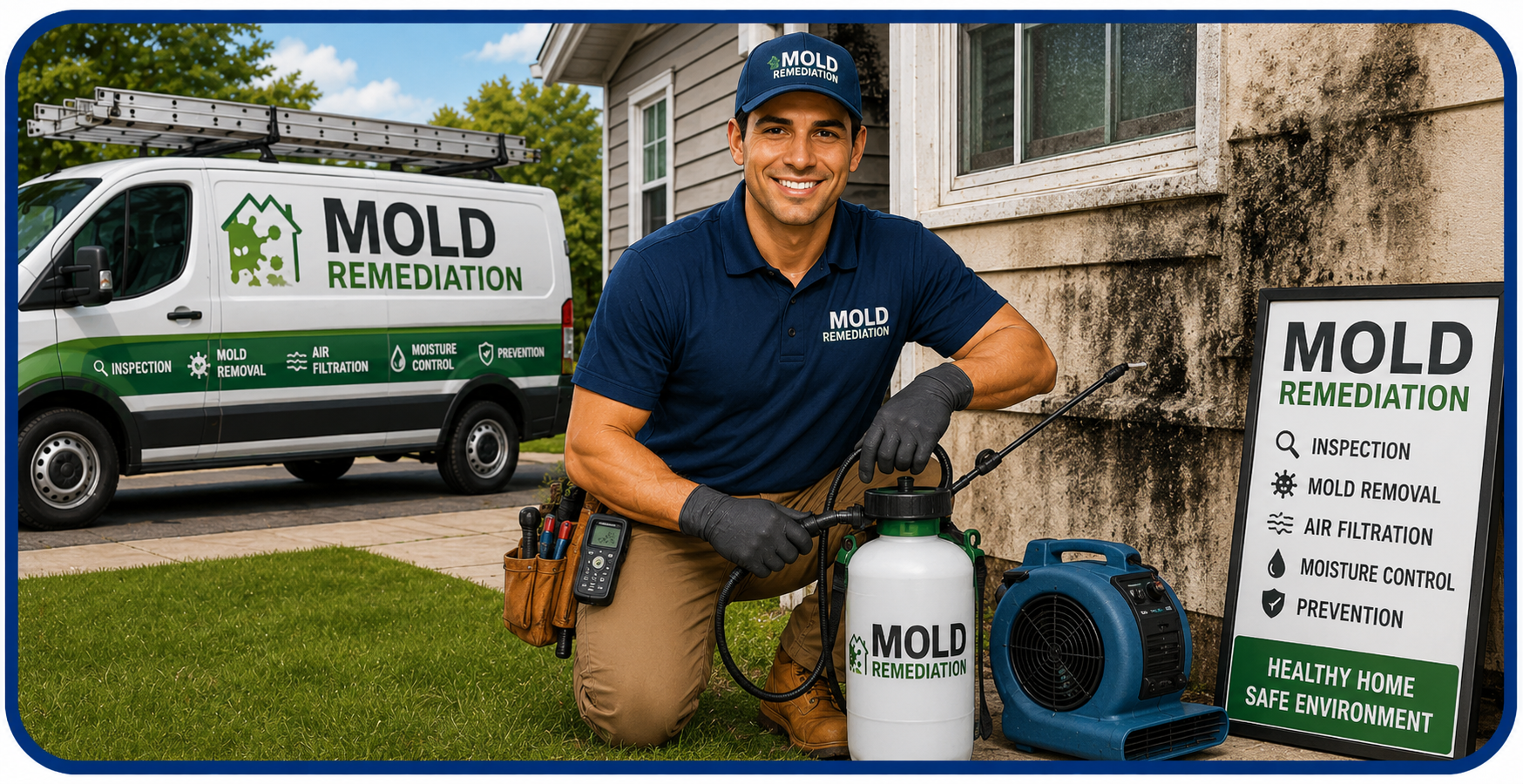
💨 Warning: A mold problem in your HVAC system means every room in your Columbia home is receiving contaminated air — the system is the delivery mechanism.
HVAC mold in a Columbia home means every time your system runs, it is actively distributing spores through every supply duct in the house. Surface mold in one room often has its origin at the air handler — and cleaning visible surfaces without addressing the HVAC source guarantees recurrence. 247 Mold Remediation remediation starts at the source: evaporator coil inspection, duct interior assessment, and source correction before clearance testing confirms the air quality throughout your Columbia property.
📞 +1-844-692-0486 — HVAC Mold AssessmentCleaning vent covers does nothing if the evaporator coil and air handler of your Columbia HVAC system are contaminated. Our assessment begins at the air handler and follows the air path through the distribution system to identify where contamination actually originates.
We conduct air sampling before and after Columbia HVAC mold remediation to document the improvement — giving you measurable confirmation that the work changed the air quality throughout your home, not just a contractor's word that the system is clean.
A heavily contaminated evaporator coil in a Columbia HVAC system may require coil replacement rather than cleaning — a decision that saves you the cost of repeated mold treatments on a component that cannot be returned to a clean state. We assess coil condition and give you an honest recommendation.
HVAC mold and room surface mold in your Columbia home are typically the same contamination event viewed from different access points. We coordinate duct and coil remediation with any surface remediation needed to eliminate both the source and the distributed contamination in a single project scope.
Of all the places mold can develop in a Columbia home, the HVAC system is uniquely dangerous because it is also the mechanism by which spores are distributed throughout the entire conditioned space. Every other mold source in a home is static — it grows where it is, and its impact on air quality is proportional to its physical distance from occupied spaces and the air movement patterns near it. A mold colony in your HVAC system, by contrast, uses your forced-air distribution network as a broadcast system, depositing spores into every supply register served by the contaminated air handler every time the blower runs. This is why Columbia homes with HVAC mold frequently show elevated spore counts in rooms that have no visible mold and no obvious moisture source — the contamination is arriving through the air supply, not developing locally.
The moisture source that drives HVAC mold in Columbia homes is almost always the evaporator coil of the cooling system. During the cooling season, the evaporator coil operates at temperatures below the dew point of the air passing across it — that is the physical mechanism by which it removes humidity from the conditioned space. The condensate that forms on the coil surface is meant to drain from the unit through the condensate drain line to an exterior discharge point. When the condensate drain becomes partially or fully clogged — a common occurrence in all Columbia climate conditions — water backs up into the drain pan beneath the coil and eventually floods the base of the air handler cabinet. The standing water in the drain pan and the perpetually wet coil surface create an ideal environment for mold colonization directly in the path of the conditioned airstream.
Beyond the coil and drain pan, the interior of your Columbia home's duct system can itself become a mold substrate. Flex duct, which uses a fiberglass insulation batting covered by a plastic jacket, can accumulate condensation on its interior surface when poorly insulated duct runs pass through hot attic or crawl space environments — the temperature differential between the supply air inside the duct and the surrounding hot air causes moisture to form on the cooler duct walls. This interior surface, combined with dust and organic debris that accumulate in duct interiors over time, provides both a moisture source and a food source for mold growth inside the supply and return air runs throughout your Columbia home.
The remediation approach for HVAC mold in a Columbia property depends entirely on where the contamination is located and how extensive it has become. Drain pan and minor coil surface contamination may be addressable through professional cleaning and antimicrobial treatment of the coil surface, drain pan, and interior cabinet. Heavily colonized coils — where contamination has penetrated the coil's fin matrix to a depth that cannot be effectively reached by surface treatment — may require coil replacement to achieve a genuinely clean air supply. Interior duct contamination typically requires HEPA vacuuming and antimicrobial treatment of accessible duct sections, with section replacement where contamination has penetrated the duct liner material itself. Post-remediation air sampling at multiple points throughout your Columbia home's supply register network confirms that contamination levels have returned to acceptable limits after the system has run for a defined period following the remediation — establishing actual clearance of the entire distribution system, not just the component that was serviced.
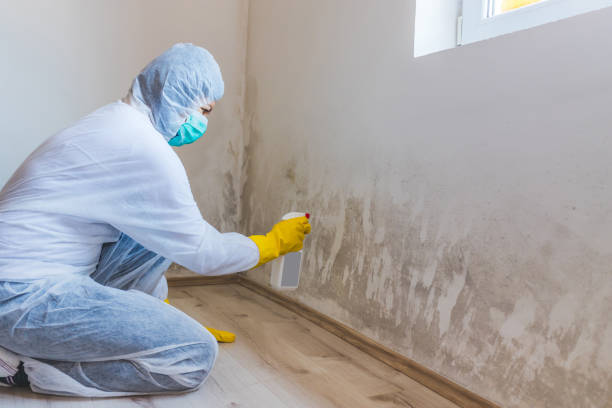
Inspection of your Columbia HVAC system's evaporator coil for mold colonization, with assessment of coil condition and a recommendation for professional cleaning versus coil replacement — followed by certified treatment and clearance testing.
Removal of standing water, organic debris, and mold growth from your Columbia HVAC unit's drain pan, along with clearing and verification of the condensate drain line function — addressing the primary moisture source for air handler mold.
HEPA vacuuming and EPA-registered antimicrobial treatment of contaminated interior duct sections in your Columbia HVAC distribution system, with duct section replacement where liner contamination has penetrated the duct material beyond surface treatment.
Air sampling at supply registers throughout your Columbia home before and after HVAC mold remediation, with third-party lab analysis and a written report documenting the air quality improvement and confirming clearance of the entire distribution system.
Integrated scope management for Columbia homes with both HVAC system contamination and surface mold in living areas — addressing the HVAC source and distributed surface contamination together so neither can re-contaminate the other after remediation.
Evaluation of your Columbia home's moisture control, HVAC maintenance practices, and filtration system to identify the conditions that allowed HVAC mold to develop — with specific recommendations to prevent recurrence after remediation is complete.
Source inspection, targeted remediation, system run testing, and air quality clearance — all documented.
We inspect the evaporator coil, drain pan, air handler cabinet, and accessible duct sections of your Columbia HVAC system to identify the location and extent of contamination before determining the remediation scope — no guesswork, no unnecessary work.
Targeted cleaning and EPA-registered antimicrobial treatment of all contaminated components identified in the inspection: drain pan, coil surface, air handler cabinet interior, and accessible duct sections. Condensate drain line is cleared and flow-tested. Coil replacement is coordinated when inspection finds replacement necessary.
After remediation of the Columbia HVAC components, the system is operated for a defined period to stabilize conditions before air sampling — ensuring that post-remediation test results reflect actual operational air quality rather than sampling during an atypical operating state.
Air sampling at supply registers throughout your Columbia home after the stabilization period, analyzed by a third-party accredited laboratory, with results compared to pre-remediation samples and outdoor reference samples. Written clearance report documents the air quality improvement and confirms your home's supply air meets acceptable spore count levels.
"My daughter was sneezing and coughing constantly but only indoors. Turned out the entire evaporator coil in our Columbia home's air handler was coated in mold growth — had been running contaminated air through the house for who knows how long. 247 Mold Remediation cleaned the coil and air handler cabinet, cleared the clogged drain line, and tested the air in every room after. The before-and-after air test numbers showed a dramatic reduction. Within a week of completion, my daughter's symptoms were gone."
"We had a mold problem in the master bedroom that kept coming back even after two rounds of surface cleaning by other companies. When 247 Mold Remediation came out they looked at the HVAC system first and found the source immediately — a completely blocked condensate drain pan that had been overflowing into the air handler cabinet. They fixed the drain, cleaned the system, and retested the air. No recurrence in over a year now."
"Our home inspector found mold in multiple rooms during a pre-listing inspection of our Columbia property. 247 Mold Remediation assessed the whole house and identified the HVAC as the distribution source — contamination at the coil was feeding all the rooms through the supply registers. They remediated the HVAC system and the room surfaces together, provided the clearance certificates for each area, and we were able to get the property on the market on schedule."
Several patterns suggest HVAC as the source of mold contamination in a Columbia home. The most telling indicator is mold appearing in multiple rooms that have no shared wall or common moisture source — when contamination shows up in a bedroom, a hallway, and a living room at the same time, the most plausible common factor is the air supply those rooms share. Other indicators include a musty smell that is noticeably stronger when the system starts up and diminishes after it has been running for several minutes (as the concentration at the coil dilutes through distribution), dark staining on vent registers or supply covers, and occupants experiencing allergy or respiratory symptoms that are worse inside the home than outside. A direct inspection of the air handler and coil is the definitive way to confirm HVAC mold in your Columbia system. Call +1-844-692-0486 to schedule an assessment.
Consumer-level HVAC cleaning for mold in a Columbia home has significant limitations and risks. Cleaning products applied to the evaporator coil without proper training and equipment can damage the coil fins, reduce system efficiency, and in the case of bleach-based products, generate fumes that enter the airstream and are distributed throughout the home. More fundamentally, DIY cleaning treats accessible surfaces but does not reach the interior of the coil's fin matrix where contamination is often most concentrated, nor does it address duct interior contamination downstream of the air handler. There is also no mechanism for a DIY approach to produce the air quality testing that confirms the cleaning was actually effective. Professional HVAC mold remediation in Columbia uses equipment sized for the job, EPA-registered products appropriate for use in air-contacted surfaces, and post-remediation air testing that confirms clearance rather than relying on visual inspection of surfaces you can reach from outside the unit.
The answer depends on the extent and depth of contamination, and on the condition of the coil itself. For a coil with surface mold growth that has not penetrated significantly into the fin matrix, professional coil cleaning with appropriate antimicrobial treatment can effectively address the contamination. For a coil with heavy, deep colonization throughout the fin channels — often accompanied by significant organic debris accumulation — the interior fin surface cannot be effectively reached by cleaning methods, and replacement is the more reliable solution. We assess coil condition in your Columbia HVAC system as part of every HVAC mold service and give you an honest recommendation based on what we find, with the reasoning explained. We do not default to replacement when cleaning is effective, and we do not recommend cleaning when the coil's condition makes replacement the better long-term choice.
Preventing HVAC mold recurrence in a Columbia home requires maintaining the two conditions that prevent mold growth in the air handler: keeping the condensate drain clear and functional, and preventing excessive moisture accumulation in the duct system. For the drain, a condensate drain pan treatment tablet installed every three months during cooling season prevents the algae and organic buildup that leads to clogs. For the duct system, ensuring that flex duct runs are adequately insulated where they pass through hot attic or crawl spaces reduces the condensation formation that creates interior duct moisture. Upgrading to a quality pleated HVAC filter rated for the system's design airflow also reduces the organic debris accumulation inside the air handler that contributes to coil contamination over time. Our Columbia HVAC mold remediation report includes specific maintenance recommendations for your system's age, type, and installation configuration.
Multiple-room mold contamination in a Columbia home is a strong indicator that the HVAC system should be inspected as a potential distribution source, though it does not confirm HVAC contamination by itself. Multi-room mold can also result from a building envelope issue that affects multiple areas, from a severe plumbing leak that affected a shared structural element, or from very high ambient humidity throughout the home. The key question is whether the contaminated rooms share a supply air distribution zone — if they are served by the same air handler and duct system, the HVAC is the most likely common factor and should be inspected first. Our Columbia whole-home mold assessment includes HVAC inspection as a standard component precisely because missing an HVAC source while remediating room surfaces guarantees recurrence. Call +1-844-692-0486 to schedule a comprehensive assessment for your Columbia property.
Don't clean the surfaces while the source keeps running. Call +1-844-692-0486 for certified Columbia Hvac And Air Duct Mold Remediation — coil inspection, duct remediation, and air quality clearance.